Dog Daycare Daily Routine: A Day in the Life at Daycare
March 24, 2026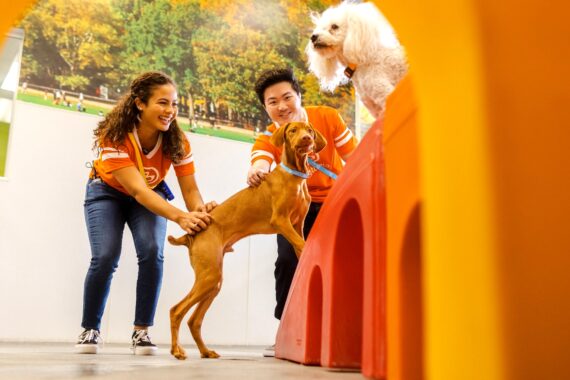
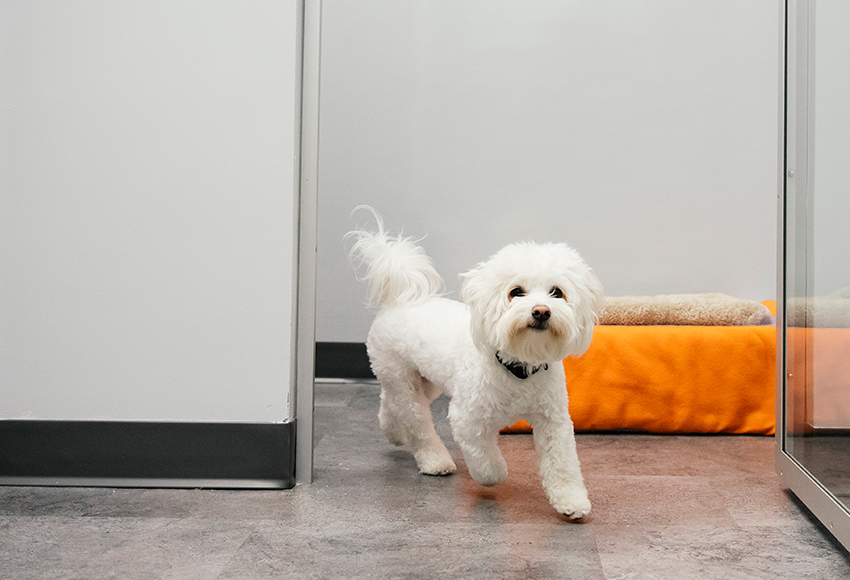
Wondering what a typical dog daycare daily routine looks like? Imagine your dog’s tail wagging the moment they arrive in the morning. For many dogs, daycare isn’t just somewhere to stay — it’s a structured, enriching environment filled with socialization, exercise, and routine.
A consistent dog daycare daily routine gives dogs the structure they need to feel confident, safe, and balanced throughout the day.
Here’s what a full day at a well-run dog daycare really looks like.
Morning Arrival in a Dog Daycare Daily Routine
Dogs arrive full of energy and excitement. Each dog is greeted at the door by a trained staff member (Rover), who brings them to the back, removes their personal gear, and replaces it with a Dogtopia collar.
To prevent overstimulation, each dog is placed briefly in a “shoot” (double-sided crate), allowing the room to settle before joining the group. Once calm, the canine coach releases them into the playroom.
This step is intentional — a smooth, controlled transition sets the tone for a safe and successful day.
Structured Playtime in a Dog Daycare Daily Routine
After entering the playroom, each dog is greeted individually by a canine coach. Staff actively supervise all interactions, ensuring play stays safe, appropriate, and positive.
Dogs are grouped based on size, temperament, and play style:
- Toybox – small or more reserved dogs
- Romper – mixed sizes with compatible temperaments
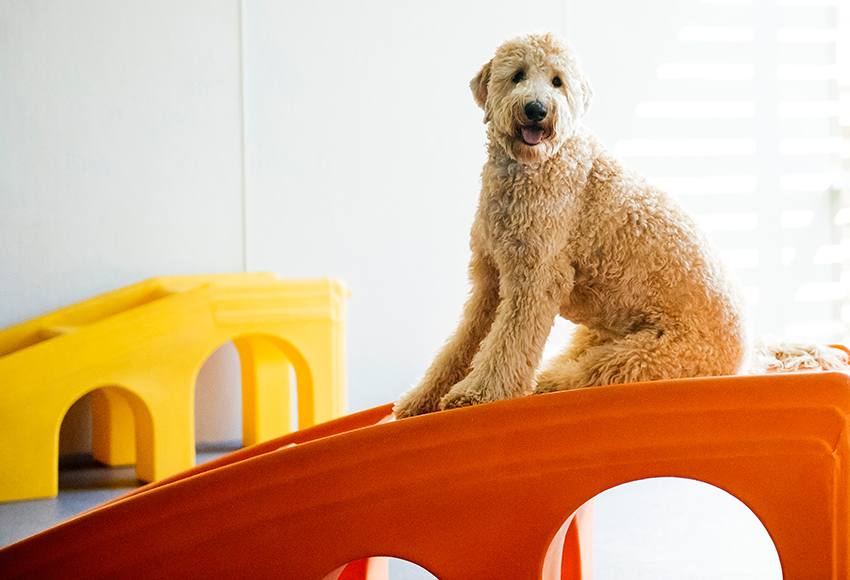
- Gym – larger, more active dogs
During play:
- Dogs engage in chasing, wrestling, and group interaction
- Staff monitor body language and step in when needed
- Dogs receive individual attention, pets, and reassurance
A consistent daycare routine helps dogs feel secure, prevents overstimulation, and supports positive social behavior. Consistent, positive socialization plays a critical role in a dog’s development, helping them build confidence and learn appropriate interactions.
A well-structured dog daycare daily routine is about more than playtime. It gives dogs consistency, guidance, and safe socialization throughout the day.
Midday Rest and Routine
Around midday, dogs transition into nap time. They rest in family-style crates or private suites, giving them a quiet, secure space to recharge.
Dogs with meals provided are fed during this time.
Rest is a critical part of a balanced daycare experience. Without it, dogs can become overstimulated, which can lead to stress or poor behavior. A predictable routine helps regulate energy levels and keeps dogs calm and comfortable.
Outdoor Breaks
Throughout the day, dogs are given opportunities for short, supervised outdoor breaks. These allow them to:
- Stretch and explore
- Get fresh air
- Engage in natural behaviors
Outdoor time helps manage energy levels and supports overall physical and mental health.
Afternoon Socialization and Play
After rest, dogs return to the playroom for another round of structured interaction. Staff continue to monitor behavior closely to ensure all play remains safe and positive.
During this time, dogs continue to:
- Build social confidence
- Practice appropriate play behavior
- Learn to regulate excitement
By the end of the day, dogs are not just tired — they’re mentally fulfilled and socially satisfied.
Pick-Up Time: Happy and Content
When dogs go home, owners often notice immediate benefits:
- Less destructive behavior
- Improved social skills
- A calmer, more relaxed demeanor
This is the result of a full day of structured activity, supervision, and routine.
Why a Dog Daycare Daily Routine Matters
A well-structured dog daycare daily routine is about much more than playtime. It provides dogs with consistency, guidance, and safe socialization that supports their mental and physical well-being.
Organizations like the ASPCA emphasize the importance of structured environments and supervision in group settings to prevent stress and encourage positive behavior.
For dogs staying longer, our boarding program follows a similar dog daycare daily routine, helping maintain consistency and reduce stress.
When done correctly, daycare doesn’t just tire your dog out — it helps shape a more confident, well-adjusted companion at home.