Healthy Dog Play: Why It’s Not Left to Chance
July 24, 2026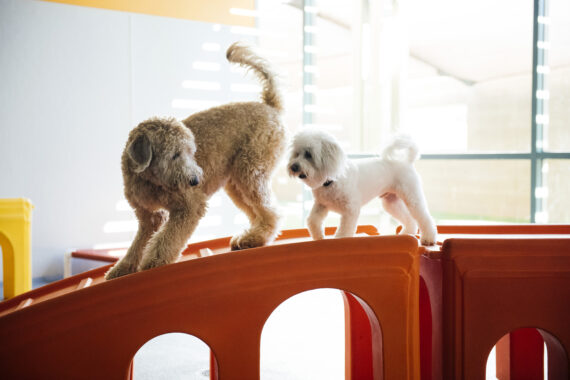
Healthy dog play looks simple. It isn’t.
Dogs use play as a form of communication, but without structure and guidance, interactions can quickly become stressful instead of enjoyable.
Play is a complex conversation involving consent, role reversals, self-handicapping, pauses, and mutual engagement. When those pieces are missing, what looks like fun can actually be tolerated stress.
Dog Play Is Communication
Dogs use play to test boundaries, build relationships, and practice social skills. But they don’t automatically know how to do this well—especially in group environments.
Different dogs have different play styles:
- Wrestlers
- Chasers
- Body slammers
- Observers
When play styles don’t match, interactions can quickly become uncomfortable. Balanced play depends on dogs learning how to adjust, respond, and respect each other’s signals.
Stress Signals Come Before Conflict
Growling, snapping, or scuffles don’t happen out of nowhere. Dogs communicate discomfort long before things escalate.
Common early stress signals include:
- Stiffening
- Avoiding eye contact
- Excessive mounting
- Frantic or erratic movement
- Freezing
Recognizing these signals is key to preventing conflict. Resources like the American Kennel Club offer helpful guidance on reading dog body language:
https://www.akc.org/expert-advice/training/how-to-read-dog-body-language/
When these cues are ignored, dogs are forced to advocate for themselves—and that’s when problems happen.
Why Intervention Matters in Dog Play
There’s a common myth that stepping into dog play “ruins it.” In reality, well-timed intervention keeps interactions safe and positive.
Without guidance:
- Play can escalate too quickly
- One dog may become overwhelmed
- Boundaries may not be respected
Stepping in at the right moment helps reset the interaction before it becomes stressful.
How Structured Environments Support Dog Play
In structured daycare environments, dogs don’t just play—they learn.
At Dogtopia of Geneva, staff actively guide interactions by:
- Interrupting play when it becomes too intense
- Redirecting energy to more appropriate outlets
- Reinforcing calm, balanced behavior
- Matching dogs based on size, temperament, and play style
👉 Learn more about our daycare programs:
https://www.dogtopia.com/geneva/
This type of structure helps dogs develop appropriate social skills and confidence over time.
What Healthy Dog Play Actually Looks Like
When play is appropriate and balanced, you’ll see:
- Role reversals (dogs take turns chasing or being chased)
- Play bows and loose body language
- Pauses and breaks between interactions
- Mutual engagement (both dogs choosing to participate)
These signs show that dogs are comfortable and enjoying the interaction.
Final Thoughts
Healthy dog play isn’t something dogs automatically understand. It’s a skill that develops through experience, guidance, and consistency.
The ASPCA also provides helpful insight into dog behavior and social interaction:
https://www.aspca.org/pet-care/dog-care/common-dog-behavior-issues
When dogs are supported in structured environments, they learn how to communicate, respect boundaries, and enjoy social interaction safely.
Healthy dog play isn’t left to chance.
It happens because someone is paying attention.