Puppy vs. Rescue: Holiday Pup? Choose the Right Dog for Your Household (Plus the Most Popular Breeds)
December 16, 2025
Every holiday season, families start asking the same question: “Should we get a dog?” The best answer is not “yes” or “no.” It’s “which dog, which timing, and which household setup.” If you make this decision like a purchase, you will get burned. If you make it like a long-term operating system choice, you will win. Let’s break down what to know about both a new puppy and rescue dogs.
Step 1: Choose the lifestyle first, then choose the dog
Before you argue “puppy vs rescue dog” or debate breeds, answer these with brutal honesty:
-
Daily exercise capacity: How many minutes can you deliver, every day, in bad weather too?
-
Alone time: How many hours will the dog be alone on a normal weekday?
-
Noise tolerance: Low, medium, high?
-
Mess tolerance: Low, medium, high?
-
Training commitment: Are you realistically doing weekly training for 8-12 weeks?
-
Grooming tolerance and budget: Brushing, bathing, professional grooming, shedding.
-
Kid situation: Toddlers, grade school, teens, or no kids.
-
Dog social goals: Do you want a dog that can comfortably be around other dogs, or is “single dog life” fine?
-
Travel reality: Boarding, sitter, bring the dog, or you mostly stay local?
Most mismatches happen because people choose a look, then try to retrofit their life around it.
Puppy vs. rescue: what you gain, what you risk
Puppies
What you gain
-
You shape early habits, socialization, and house rules.
-
Fewer unknowns in terms of history.
What you risk
-
Puppies are predictable chaos: biting, chewing, accidents, and sleep disruption.
-
The “cute stage” is short. The work stage is long.
-
Many behavior problems are owner-created in the first 6 months.
Who puppies fit best
-
Households with time, structure, and consistency.
-
People who actually want to train, not just own.
Rescue dogs
What you gain
-
With many adult dogs, you skip the hardest developmental stages.
-
If the dog is in foster, you may get real-world insight on temperament, routines, and triggers.
What you risk
-
Unknown history can mean surprises: separation stress, leash reactivity, noise sensitivity, resource guarding, or medical issues.
-
The adjustment period is real. A new environment can temporarily change behavior.
Who rescue dogs fit best
-
Households that want a calmer day-to-day, with fewer “puppy problems.”
-
People willing to be patient and manage a transition period.
Shelters and rescues are a major part of the dog ecosystem. In 2024, approximately 2 million shelter dogs were adopted. ASPCA+1
A quick reality check: dog ownership is common, but easy ownership is not
Tens of millions of U.S. households own dogs, and the total U.S. dog population is massive. AVMA That matters because it proves two things at once:
-
Plenty of people do this successfully.
-
Plenty of people also underestimate what they signed up for.
- Puppy and rescue dogs should be viewed as a long term commitment, so have a gameplan and look for socialization and exercise with daycare facilities to support healthy development.
“Most popular breeds” and what that list actually means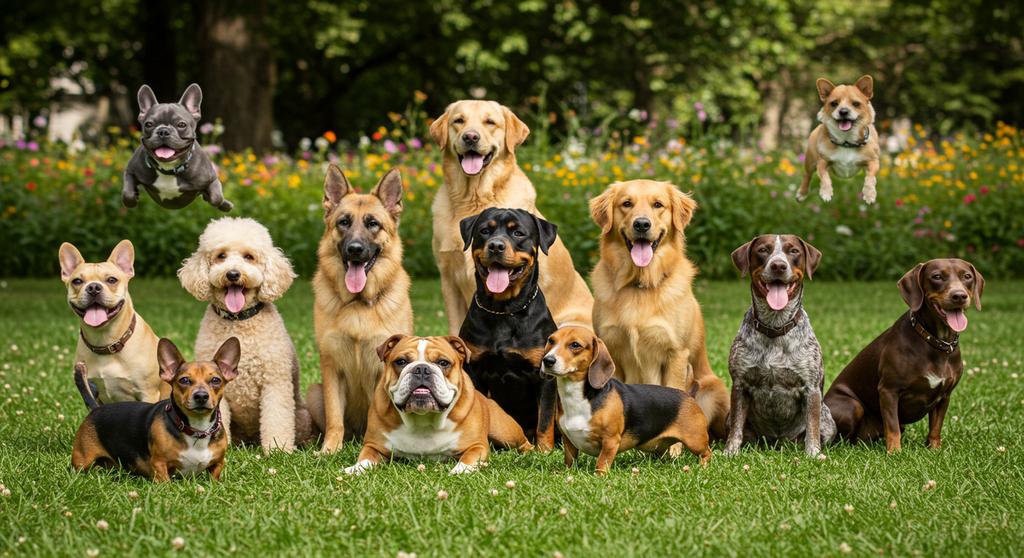
When you see “most popular breeds,” understand what you’re looking at. The American Kennel Club (AKC) list reflects AKC registrations, meaning it trends toward purebreds, not the full dog population. Still, it’s a useful snapshot of what people are choosing.
AKC Most Popular Dog Breeds of 2024 (Top 10): American Kennel Club
-
French Bulldog
-
Labrador Retriever
-
Golden Retriever
-
German Shepherd Dog
-
Poodle
-
Dachshund
-
Beagle
-
Rottweiler
-
Bulldog
-
German Shorthaired Pointer
Now the part people avoid: popular does not mean easy. Here’s the honest version of what to expect.
What these popular breeds are really like
French Bulldog (and other flat-faced breeds)
-
Usually affectionate and very high energy, people-focused, and adaptable to smaller homes.
-
Health reality: Flat-faced (brachycephalic) dogs are prone to airway issues that can show up as noisy breathing, exercise intolerance, and heat intolerance. American College of Veterinary Surgeons+2Cornell Vet School+2
-
If you choose one, you need a plan for heat management, weight control, and a veterinarian who takes breathing seriously.
Labrador Retriever
-
Generally social, biddable, and family-friendly.
-
The downside is not temperament, it’s energy. Under-exercised Labs get destructive and mouthy.
-
Great fit for families who will actually move.
Golden Retriever
-
Usually tolerant, trainable, and people-oriented.
-
Expect grooming and shedding. If your household hates fur, don’t pretend.
German Shepherd Dog
-
Smart, athletic, often protective.
-
Needs training and structure. Without it, you get reactivity and anxiety.
-
Not a “set it and forget it” dog.
Poodle (Standard, Miniature, Toy)
-
Highly intelligent and trainable.
-
Often a strong choice for allergy-concerned households, but no dog is truly hypoallergenic.
-
Grooming is the tradeoff. If you skip it, coat issues follow.
Dachshund
-
Funny, loyal, bold.
-
Often stubborn, vocal, and not automatically kid-proof.
-
A lot of “small dog problems” are actually “owner lets the dog run the house” problems.
Beagle
-
Sweet and social.
-
Scent-driven. That means roaming risk, selective hearing, and potential noise.
-
Great dog, but not a low-effort dog.
Rottweiler
-
Powerful, loyal, often stable with good breeding and training.
-
Requires serious ownership: early socialization, obedience, and consistent boundaries.
-
If your household is inconsistent, don’t choose a dog that punishes inconsistency.
Bulldog
-
Typically affectionate and lower-energy.
-
Similar flat-faced health concerns apply, including heat and exercise tolerance. American College of Veterinary Surgeons+1
German Shorthaired Pointer
-
High-drive, athletic, built for movement.
-
Needs real daily work, not a quick backyard break.
-
Amazing for active owners. Miserable for sedentary ones.
Which dogs tend to fit different household types (especially by kids’ ages)
This is not a promise, it’s a pattern for puppy and rescue dogs.
Homes with toddlers and young kids
Priorities: tolerance, predictability, trainability, and calm handling.
-
Often a good fit: Labs, Goldens, Golden Doodles, many well-matched adult rescues with known temperament.
-
Watch-outs: very mouthy herding breeds, high-drive working breeds, and nervous dogs that do not enjoy chaotic movement.
Homes with older kids and teens
Priorities: activity match and shared responsibility.
-
Often a good fit: sporting breeds, some herding breeds, adolescent dogs, active adult rescues.
-
Watch-outs: teens who “want a dog” but do not want to do dog work.
Work-from-home households
Biggest risk: accidentally creating separation anxiety.
-
Your dog still needs alone-time practice, even if you are home all day.
-
Often a good fit: adult rescues with stable temperaments, trainable breeds that handle routine well.
-
Watch-outs: getting a puppy, never leaving, then being shocked when the dog panics later.
Older adults or lower-mobility homes
Priorities: calm, manageable size, lower exercise demand.
-
Often a good fit: calm adult rescues, smaller companion breeds, senior dogs.
-
Watch-outs: young high-energy dogs that require athletic output.
Apartments and smaller homes
Apartments do not require “small dogs.” They require dogs with manageable daily needs.
-
Often a good fit: dogs with moderate exercise needs and good settling behavior.
-
Watch-outs: vocal breeds, high-drive dogs, and any dog with poor alone-time skills.
If you choose a rescue: how to reduce surprises
-
Prefer foster-based insight when possible. A foster can tell you how the dog behaves in a home, not just a kennel.
-
Ask direct questions: separation behavior, resource guarding, dog-to-dog social skills, kid exposure, noise sensitivity.
-
Plan a decompression period. A new dog often needs time to settle before you judge “who they are.”
Also remember: shelter outcomes vary by community, but the scale is large. Shelter Animals Count reported total dog and cat adoptions of 4,192,443 in 2024, roughly split between dogs and cats. Shelter Animals Count+1
If you choose a puppy: how to avoid raising a problem dog
-
Do not confuse “socialization” with “letting the puppy meet everything.”
-
Socialization is controlled exposure, neutrality, and confidence-building.
-
Build three habits early:
-
Potty routine
-
Calm settling (naps and crate time)
-
Alone-time practice
-
Most “bad dog” stories are actually “no structure” stories.
Where daycare fits in the puppy vs. rescue Dog decision
Most households do not fail at “getting a dog.” They fail at building a consistent weekly routine that meets the dog’s needs. Quality daycare can be a practical tool that solves three common problems for both puppies and rescues:
-
Structured exercise that prevents restless, destructive behavior at home.
-
Guided social exposure with trained supervision, instead of chaotic, uncontrolled interactions.
-
Routine and separation practice so the dog learns that time away from you is normal, not a crisis.
Daycare is not a substitute for training. It is a multiplier for households that want a safer, more stable dog over time.




How daycare helps puppies from a breeder
A puppy’s early months are when habits and confidence get shaped. The mistake people make is thinking “socialization” means flooding the puppy with new dogs and new environments. Good daycare does the opposite: it controls the environment.
What daycare can do well for puppies:
-
Build dog-dog communication in a supervised setting with appropriate playmates.
-
Teach emotional regulation through structured play, breaks, and down time.
-
Prevent boredom behaviors that often show up as chewing, nipping, and nonstop attention seeking at home.
-
Create a predictable weekly rhythm so the puppy learns to settle on non-daycare days.
How to use daycare correctly with a puppy:
-
Start only when the facility’s health requirements are met and the puppy is ready for group play.
-
Begin with short, controlled sessions, then scale up.
-
Pair daycare with basic home rules: crate time, alone-time practice, and simple obedience.
The goal is not “a tired puppy.” The goal is a puppy that learns to function calmly around other dogs and then bring that calm home.
How daycare helps rescue dogs
Rescue dogs often come with unknown history, and the adjustment period is real. Daycare can help when it is used as a controlled exposure tool, not a forced social situation.
What daycare can do well for rescues:
-
Provide confidence through routine: same place, same people, consistent expectations.
-
Offer controlled social exposure for dogs that need to relearn safe play and polite interaction.
-
Reduce stress behaviors driven by isolation, boredom, or pent-up energy.
-
Support work-from-home owners who unintentionally create separation anxiety by never leaving the dog alone.
How to use daycare correctly with a rescue:
-
Treat the first visit as an assessment, not a commitment.
-
Introduce gradually. Some rescues do best with limited frequency at first.
-
Watch for progress markers: calmer evenings, better settling, improved leash behavior, reduced reactivity, reduced destructive behavior.
A good facility will tell you when daycare is helping and when it is not the right tool.
What parents should look for in a daycare
If you include daycare in the plan, the standards matter. Look for:
-
Temperament-based grouping, not “one big room for everyone.”
-
Active supervision with staff who intervene early, not late.
-
Planned breaks and rest, not nonstop stimulation.
-
Clean protocols and clear health requirements should be explained to you by the facility.
-
Transparency: you should be able to tour and see the entire facility and observe dogs in playrooms, bonus look for live webcamm access.
The bottom line
-
When choosing bewteen a puppy and a rescue dog, choose a dog that fits your real life, not your fantasy life.
-
Puppies give you influence but demand time and skill.
-
Rescues can be easier day-to-day but require patience and smart matching.
-
Popular breeds are popular for reasons, but every breed has a cost. Usually that cost is time, training, grooming, or health management.
If you want a simple decision rule: pick the dog that makes consistency easiest for your household. Consistency is what creates a great family dog.
- share
- on Facebook
- on Twitter
- by email
- by link