Returning to the Office in 2026? A Simple Dog Routine for New St. Louis Commuters
January 26, 2026
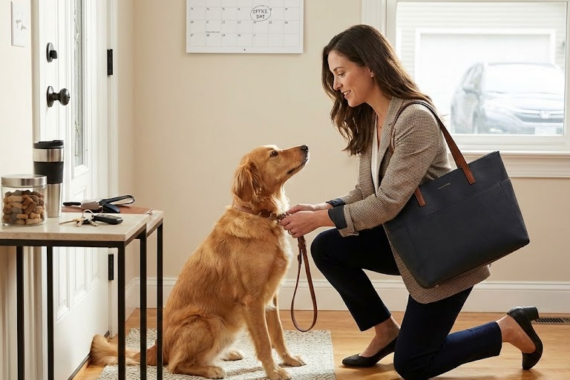
If your household just shifted back toward in-office work, your dog’s routine changed overnight. Most behavior issues that show up are not personality problems, they are schedule problems. You just need a good return to office dog routine in St. Louis.
This post gives you a commuter-friendly plan for Rock Hill families who need mornings to be fast, workdays to be predictable, and dogs to be calm when left home.
Why “return to office” causes dog problems fast
Three things happen at once:
-
Your dog loses daytime contact and stimulation.
-
Your dog suddenly has long, quiet hours with no structure.
-
You start rushing in the morning and at pickup, which adds tension.
The result is usually one of these:
-
barking or whining after you leave
-
destructive chewing
-
accidents or stress pacing
-
“clingy” behavior when you are home
The fix is not “more toys.” The fix is a repeatable weekly rhythm.
The goal: DAYCARE THAT FITS a hybrid schedule
Most people do not need 5 days of daycare. They need the right mix.
The 3 best schedule options for hybrid workers
Option A: 2 days daycare (best starter plan)
-
Daycare on your two longest in-office days
-
Home days stay structured with morning exercise and mid-day enrichment
Option B: 3 days daycare (best for high-energy dogs)
-
Daycare on Mon/Wed/Fri or Tue/Wed/Thu
-
Home days are calmer and easier to manage
Option C: Split shifts (best for sensitive dogs)
-
One full daycare day
-
One half day or shorter day (if you offer it)
-
Purpose: practice time alone without jumping straight to 8 hours
Consistency beats intensity. Two to three steady days per week usually beats one random day. Schedule your Meet & Greet visit for a dog evaluation along with a tailored daycare plan recommendation.
The commuter morning routine (15 minutes that matters)
Your dog does not need a marathon before work. They need a good St. Louis return-to-office dog routine in the form of a predictable sequence.
Do this every workday morning:
-
3 to 5 minutes potty break
-
5 minutes movement (brisk walk or backyard play)
-
2 minutes basic cues (sit, down, place)
-
Calm exit, no dramatic goodbyes
If your dog is anxious, add one simple step:
-
Give a food puzzle only when you leave. It becomes the “leaving cue” that predicts something positive.
How to leave your dog alone for 8 hours without creating panic
If your dog is not used to it, do not go from zero to eight.
A 10-day ramp plan
-
Days 1–3: practice leaving for 15–30 minutes once per day
-
Days 4–6: increase to 60–90 minutes
-
Days 7–10: increase to 2–4 hours on a home day
On daycare days, do not also do long alone-time practice. Let those days be the release valve.
Daycare vs dog walker 
A walker can help with potty and a short break. It does not solve the bigger need for structured stimulation and social time for dogs who crave it.
Use this decision rule:
-
If your dog struggles with boredom behaviors, day care often wins.
-
If your dog doesn’t move around well and only needs a break, a walker can be enough.
-
If your dog is anxious, a daycare plan could include gradual increments to help boost confidence while you’re away.
- Pricing options is important, on average dog walkers charge $30 for an hour or you can see our flexible daycare plans that include a full day of play.
What to look for in a daycare when you are a commuter
You want safety and predictability, not “a place to run.”
Non-negotiables:
-
supervised play, not free-for-all
-
grouping by size and temperament
-
clean facility that does not smell like urine
-
a structured evaluation or Meet and Greet
-
transparent communication about how your dog did
- hours and drop-off times that fit your life, Dogtopia Rock Hill opens at 6:30 am for dropoff.
How daycare supports separation stress
Daycare does not “cure” separation anxiety by itself. What it does well:
-
drains energy in a healthy way
-
builds routine and confidence
-
reduces the total hours spent alone during the hardest transition weeks
The best combo is daycare plus gradual alone-time practice on your home days.
Common mistakes that make return-to-office worse
-
Leaving your dog alone for 8 hours on day one with no ramp
-
Trying a random daycare day with no consistency
-
Over-exciting departures and arrivals
-
Giving freedom to the whole house when the dog is stressed
-
Skipping morning structure because you are late
A simple weekly plan you can copy
If you go in Tuesday and Thursday:
-
Tue: daycare
-
Thu: daycare
-
Mon/Wed/Fri: morning routine + 20 minutes of enrichment + short alone-time reps
If you go in Mon/Wed/Fri:
-
Mon/Wed/Fri: daycare
-
Tue/Thu: calm home days with training reps and a shorter walk
Rock Hill note: why this location fits commuter life
Rock Hill is positioned for the I-64/40 commuter corridor. If your priority is a predictable morning routine, your daycare needs to be simple to use and consistent. That is the entire point of the plan above.
FAQ
How do I prepare my dog for returning to the office?
Build a weekly rhythm, ramp up alone time gradually, and use daycare 2–3 days per week to prevent boredom behaviors and stress during the transition.
How often should I use dog daycare with a hybrid schedule?
Most households do well with 2 days per week. High-energy dogs often do best with 3. Consistency matters more than the exact number.
Can daycare help separation anxiety?
It can reduce the pressure by providing routine and healthy activity, but you still need gradual alone-time training on non-daycare days.
How do I leave my dog alone for 8 hours?
Do not jump straight to eight. Ramp up from 15–30 minutes to 2–4 hours over about 10 days, then extend further once your dog is calm.