Does Your Dog Actually Need a Professional Groomer? Here Is the Honest Answer
Dog Tips June 3, 2026
It is a fair question. Professional grooming costs money, requires scheduling, and from the outside can look like something designed more for the owner’s benefit than the dog’s. Your dog does not care what they smell like. They would happily roll in something unpleasant five minutes after a bath. So is professional grooming actually necessary, or is it a nice-to-have that the pet industry has successfully convinced us we cannot live without?
The honest answer is that it depends on your dog, but for most dogs, professional grooming is genuinely important for their health, not just their appearance. And for many breeds, skipping it or doing so inconsistently creates real problems that go well beyond an untidy coat.
Here is what professional grooming actually addresses, where it matters most, and how to figure out what your specific dog actually needs.
What Professional Grooming Does That Home Grooming Cannot Fully Replicate.
Bathing your dog at home is something most pet parents can manage reasonably well for basic coat maintenance. But professional grooming is not just a more thorough version of a home bath. It involves a combination of trained observation, specialized equipment, and technical skills that are genuinely difficult to replicate without experience.
Here is what a professional grooming appointment addresses that a home bath typically does not.
A Trained Eye on Your Dog’s Skin and Coat
A professional groomer works closely with your dog’s skin and coat at every appointment. They are positioned to notice things that most owners miss during casual interaction: early signs of skin irritation, unusual lumps or bumps, hot spots, parasites, coat texture changes that can indicate nutritional deficiencies or hormonal issues, and areas of tenderness or discomfort that your dog may not otherwise show. That observational role is one of the most underappreciated aspects of regular professional grooming, and it has led to the early detection of health issues that have made a genuine difference in outcomes.
Proper Nail Care
Trimming a dog’s nails at home is possible, but it requires confidence, the right tools, and a cooperative dog. Many pet parents either avoid it entirely or do not trim back far enough to be effective. Nails that are consistently too long alter the mechanics of how a dog walks, putting uneven pressure on their toes, paws, and joints in ways that compound over time. In senior dogs in particular, chronically overgrown nails contribute to joint pain and mobility issues that are entirely preventable with regular trims. A professional groomer handles this quickly, safely, and with far less stress than most home attempts produce.
Ear Cleaning Done Properly
Dog ears, particularly in floppy-eared or heavily coated breeds, trap moisture and debris, creating ideal conditions for bacterial and yeast infections. Regular professional ear cleaning removes that buildup before it becomes a problem. Left unaddressed, chronic ear infections are painful for your dog, frustrating to treat, and expensive to manage repeatedly at the vet. A five-minute ear cleaning during a grooming appointment is a straightforward preventive measure that pays for itself many times over.
Teeth Brushing
Dental disease is one of the most common health problems in dogs, and most dogs do not receive nearly enough dental care. Professional teeth brushing during a grooming appointment removes surface plaque and tartar, contributing to oral health between veterinary dental cleanings. It is not a substitute for veterinary dental care, but it is a meaningful supplement that reduces buildup and helps prevent the progression of gum disease.
Breed-Specific Coat Work
Some coat types require techniques that are genuinely difficult to perform correctly without training. Hand-stripping wire coats, properly de-shedding double coats, managing curly coats to prevent matting, and maintaining the specific cuts required for certain breeds all involve skills that take time and experience to develop. A professional groomer trained in these techniques produces results that most home grooming simply cannot match, and more importantly, they do it in ways that keep the coat healthy rather than just temporarily tidy.
When Home Grooming Is and Is Not Enough
Home grooming plays a legitimate role in most dogs’ care routines. Regular brushing between professional appointments helps maintain coat condition, reduce shedding, and keep your dog comfortable. A home bath when your dog gets into something unpleasant is perfectly appropriate. Basic nail maintenance between professional appointments is worthwhile if you are comfortable doing it correctly.
Where home grooming falls short is in the consistency and technical quality required to address the health-related aspects of coat care over time. Most pet parents do not have the training to recognize early skin or coat changes, the equipment to properly de-shed a double coat or dry a dense curly coat, or the experience to manage a dog that is resistant to having their nails, ears, or mouth handled.
The gap between home grooming and professional grooming is smallest for short-coated, low-maintenance breeds and largest for heavily coated, curly, or wire-coated breeds that require specific technical work to stay healthy and comfortable.
For most dogs, the most effective approach is a combination: regular home brushing and basic maintenance between appointments, with professional grooming on a schedule that matches the dog’s coat type and lifestyle. The two are not competing options. They work together.
The Breeds That Need Professional Grooming Most
While virtually all dogs benefit from professional grooming services at some frequency, certain breeds have needs that genuinely cannot be met through home grooming alone.
Doodle Breeds
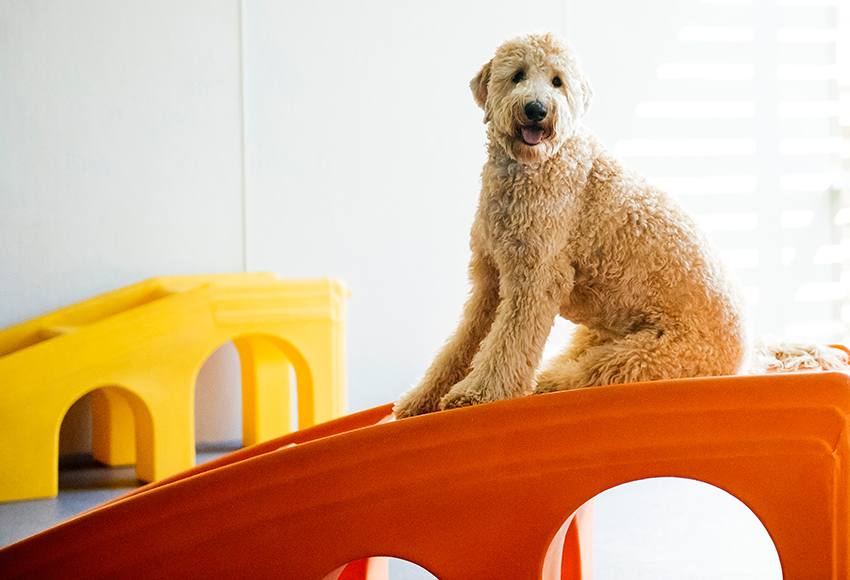
Labradoodles, Goldendoodles, Bernedoodles, and similar crosses have surged in popularity across Northern Virginia over the past decade, and they are also among the most grooming-intensive breeds to own. Their curly or wavy coats do not shed the way straight-coated breeds do. Instead, dead fur remains trapped in the coat and progressively mats without consistent professional attention. Regular professional bath, brush-out, and blowout appointments every three to four weeks are essential for keeping the coat clean, manageable, and free of buildup that can lead to matting. For haircut grooming and trimming, doodle owners will want to work with a dedicated grooming salon in addition to maintaining a regular spa schedule.
Double-coated Breeds
German Shepherds, Golden Retrievers, Labrador Retrievers, Huskies, Border Collies, and similar breeds have a dense undercoat that requires professional de-shedding to manage effectively. Regular professional grooming that includes a thorough brush-out and blowout removes far more dead undercoat than home brushing can reach, which dramatically reduces shedding and keeps the coat functioning properly as insulation. This matters especially during Virginia’s hot, humid summers, when a well-maintained coat regulates temperature more effectively than a neglected or matted one.
Long and Silky-coated Breeds
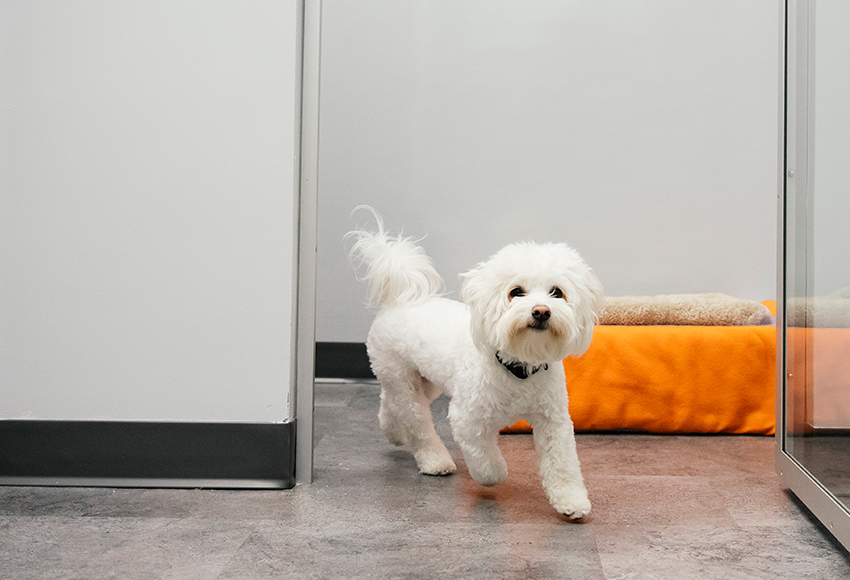
Shih Tzus, Maltese, Yorkshire Terriers, Cocker Spaniels, and similar breeds benefit significantly from regular professional bath, brushout, and conditioning appointments to prevent matting, maintain coat health, and keep the dog comfortable. For breed-specific cuts and trimming, these breeds will also need visits to a dedicated grooming salon. Still, consistent professional bath and brush-out services play an important role in keeping the coat in good condition between those appointments.
Wire-coated Breeds
Terriers and similar wire-coated breeds benefit from regular professional bathing and brushout services to keep the coat clean and manageable. Hand-stripping and breed-specific trimming for these coats requires a dedicated grooming salon, but regular spa maintenance keeps the coat healthy between those specialized appointments.
What to Look for in a Professional Groomer
Not all grooming experiences are equal, and as a pet parent, it is worth knowing what separates a quality professional grooming environment from a mediocre one.
The groomer should use pet-safe, high-quality products rather than generic formulas that can irritate sensitive skin. The facility should be clean, calm, and designed to minimize stress for the dogs in their care. Staff should be trained and experienced, not just willing. And the groomer should communicate with you after the appointment about anything notable they observed, including skin conditions, coat changes, and behavioral responses during the session.
A quality grooming experience treats the appointment as a health service, not just a cosmetic one. That mindset shows up in the way they handle your dog, the products they choose, and the information they share with you afterward.
At Dogtopia of Dulles, our dog spa specializes in professional spa services, including baths and blowouts, deep conditioning, brushouts, nail trims and grinds, ear cleaning, and teeth brushing. We do not offer haircut grooming or breed-specific cuts, which means our spa is the perfect complement to your regular grooming salon rather than a replacement for it. Think of us as the in-between appointments that keep your dog’s coat, nails, ears, and teeth in top condition between full grooms.
Spa services can be added to any daycare or boarding visit, which makes it straightforward to keep your dog on a consistent care schedule without adding a separate trip to your week. Drop your dog off for a day of play and pick up a clean, freshly maintained dog at the end of it.
So Does Your Dog Actually Need a Professional Groomer?
For most dogs, yes. Not because home grooming has no value, but because professional grooming addresses health-related aspects of coat care that home grooming cannot fully replicate, and because the trained observation that comes with regular professional appointments has genuine value for your dog’s long-term health.
The frequency of spa services depends on your dog’s breed, coat type, and lifestyle. Every three to four weeks for high-maintenance coat types that mat easily. Every four to six weeks for medium-maintenance breeds. Every six to eight weeks for lower-maintenance short-coated dogs. For breeds that also require haircut grooming, regular spa appointments between salon visits keep the coat in significantly better condition and make each full groom easier and less stressful for your dog.
The investment in consistent professional spa care pays off in ways that go well beyond a clean-smelling dog. It pays off in healthier skin, better coat condition, properly maintained nails and ears, improved dental health, and the early detection of issues that might otherwise go unnoticed until they become more serious.
Your dog cannot ask for what they need. Regular professional care is one of the clearest ways to give it to them anyway.
To book a spa appointment or add grooming services to a daycare or boarding visit, visit us at 3850 Dulles South Court, Suite D, Chantilly, Virginia 20151, or call us at (703) 278-2021. You can also explore our full range of services and pricing options on our website.