Positive Reinforcement Dog Training: Building Trust Instead of Fear
May 22, 2026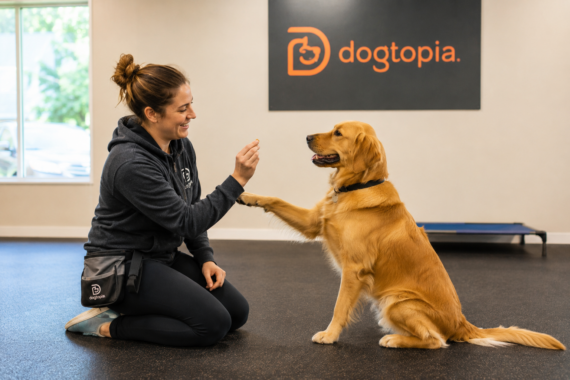
Positive reinforcement dog training has become one of the most recommended and widely used training approaches by trainers, veterinarians, and behavior professionals. Instead of relying on fear, intimidation, or punishment, reward-based training focuses on teaching dogs through trust, communication, and encouragement.
Dog training has changed significantly over the years. Methods that were once considered “normal” — like leash corrections, alpha rolls, pinch collars, and punishment-heavy techniques — are now being questioned as our understanding of canine behavior and learning continues to evolve.
At Dogtopia of Geneva, we believe training should strengthen the relationship between dogs and their owners while helping dogs feel confident, successful, and emotionally secure.
What Is Positive Reinforcement Dog Training?
Positive reinforcement dog training means rewarding behaviors you want your dog to repeat. Rewards may include treats, praise, toys, play, affection, or access to things your dog enjoys.
Instead of focusing primarily on punishment or corrections, positive training teaches dogs what to do.
For example:
- Rewarding calm behavior instead of punishing excitement
- Reinforcing loose-leash walking instead of relying on harsh leash corrections
- Teaching recall through games and rewards instead of fear or intimidation
One of the biggest misconceptions about positive reinforcement training is that it means letting dogs “do whatever they want.” That’s not true.
Reward-based training still includes structure, boundaries, consistency, and accountability. The difference is in how those lessons are taught.
Why Positive Reinforcement Dog Training Works
Dogs repeat behaviors that are rewarding. When dogs feel safe, motivated, and engaged, learning tends to happen more effectively and with less stress.
Positive reinforcement training can help:
- Strengthen the bond between dogs and owners
- Improve focus and engagement
- Build confidence in shy or nervous dogs
- Encourage long-term reliability
- Reduce frustration and anxiety during training
According to the American Veterinary Society of Animal Behavior, reward-based training methods are considered safer and more effective than punishment-based approaches.
The American Kennel Club also supports positive reinforcement as an effective way to teach dogs new behaviors.
Training should not rely on fear or intimidation. The goal is to create clear communication and help dogs succeed.
Concerns With Punishment-Based Dog Training Methods
Tools such as pinch collars, shock collars, harsh leash corrections, and other punishment-based methods are designed to stop behaviors by creating discomfort, pressure, or avoidance.
While these methods may sometimes suppress behaviors quickly, they do not always address the underlying emotion behind the behavior.
For example, if a reactive dog is corrected every time they see another dog, the dog may stop reacting outwardly — but the fear, stress, or anxiety may still remain underneath. In some cases, punishment can actually increase anxiety or create negative associations with triggers in the environment.
A dog stopping a behavior does not always mean the emotional issue has been resolved.
Some concerns with punishment-based training may include:
- Increased fear or anxiety
- Reduced trust between dog and handler
- Suppression of warning signs
- Increased stress around triggers
- Worsening fear-based behaviors in sensitive dogs
Modern canine behavior science has increasingly shifted toward training methods focused on guidance, communication, and reinforcement rather than intimidation.
Positive Reinforcement Training Builds Confidence and Trust
Good training is about more than obedience. It’s about helping dogs learn how to navigate the world successfully and confidently.
At Dogtopia of Geneva, we focus on helping dogs build:
- Confidence
- Impulse control
- Engagement
- Social skills
- Reliable communication with their owners
We want dogs to feel successful during training — not fearful of making mistakes.
Our training programs are designed to create positive learning experiences while helping dogs develop real-life skills they can use both at home and in everyday situations.
Whether your dog is learning basic obedience, improving recall, or building confidence around distractions, our goal is to strengthen the relationship between dogs and their owners through humane, reward-based training methods.
Every dog is different, and training is never one-size-fits-all. Our goal is not to judge owners for past training choices, but to help dogs succeed using methods that prioritize both learning and emotional wellbeing.
If you’re interested in learning more about our training programs, visit our training page or contact us today.
📞 (630) 283-1700
📧 [email protected]
Learn more here:
Dogtopia of Geneva Dog Training