Why Dogs Don’t Listen Outside (Even If Trained)
June 5, 2026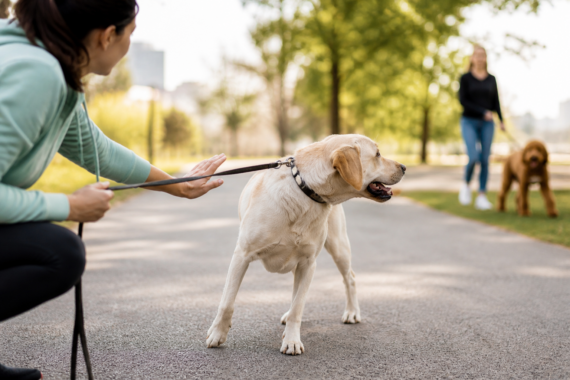
If you’ve ever wondered why dogs don’t listen outside the house—even when they’re trained—you’re not alone. Many dogs who respond perfectly at home struggle in new environments, and it’s not because they’re stubborn—it’s because the environment has changed.
This is one of the most common frustrations dog owners experience. In most cases, it has less to do with training and more to do with environment, focus, and stimulation.
DOGS DON’T GENERALIZE AS EASILY AS WE THINK
Dogs don’t automatically apply what they’ve learned in one place to every situation.
A dog who responds to “sit” at home may struggle:
- outside on a walk
- around other dogs
- in a busy or exciting environment
They’re not ignoring you—they’re processing more at once. This is a major reason why dogs may respond inconsistently across different environments.
DISTRACTIONS CHANGE EVERYTHING
New environments introduce:
- unfamiliar smells
- movement
- sounds
- other dogs
All of this competes for your dog’s attention.
Even a well-trained dog can have difficulty focusing when their surroundings are more stimulating than the cue being asked. This is another reason why dogs may struggle to respond as reliably outside the home.
Dogs also thrive on structure and routine, which is why consistency plays such a big role in how they respond. You can see how routine impacts behavior in our blog on a structured daycare routine.
WHY DOGS DON’T LISTEN: IT’S ABOUT FOCUS, NOT DEFIANCE
When a dog doesn’t respond, it’s easy to assume they’re choosing not to listen.
In reality, it’s usually:
- distraction
- overstimulation
- or difficulty shifting attention back to you
Training isn’t just about teaching commands—it’s about helping dogs stay engaged even when their environment changes.
Sometimes what looks like disobedience is simply your dog struggling to focus in a more stimulating environment.
Understanding the difference between stimulation and fatigue plays a big role—read more in our blog on bored vs. tired dogs.
CONSISTENCY ACROSS ENVIRONMENTS MATTERS
For dogs to truly understand a behavior, it needs to be practiced in different settings:
- low-distraction environments
- moderately distracting environments
- more stimulating environments over time
This builds reliability and confidence.
Practicing in different settings is key to improving real-world reliability.
You can learn more in the American Kennel Club’s guide on training in different locations.
Over time, this kind of exposure helps dogs become more confident, focused, and consistent in a variety of situations.
HOW THIS CONNECTS TO DAYCARE AND TRAINING
In a structured daycare environment, dogs are constantly practicing:
- responding around other dogs
- settling after excitement
- shifting between play and calm
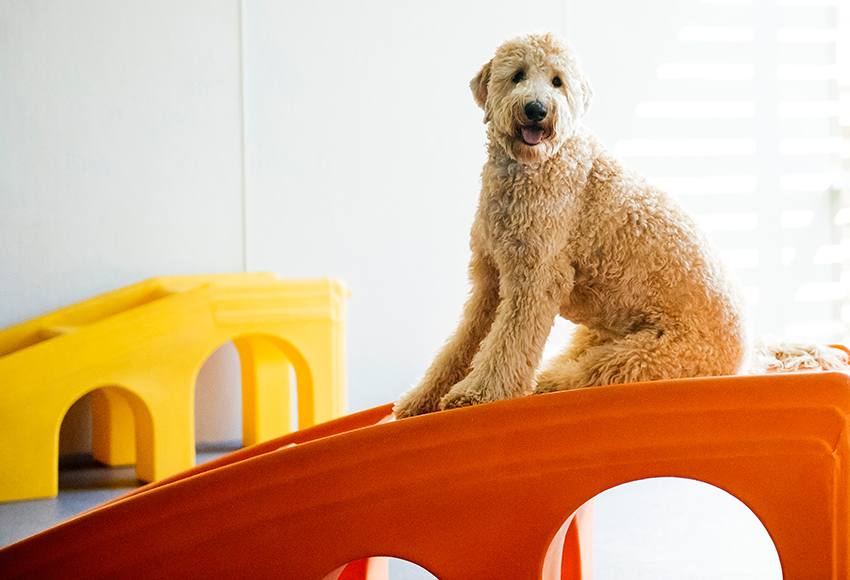
At Dogtopia of Geneva, dogs are grouped by size, temperament, and play style, helping them stay engaged without becoming overwhelmed.
This type of environment reinforces focus in a way that’s difficult to replicate at home.
A structured daycare environment can help build better focus and real-world reliability over time—learn more about our dog daycare services.
For more structured support, our dog training programs focus on building reliability—even around real-life distractions.
THE BOTTOM LINE
If your dog doesn’t listen sometimes, it doesn’t mean training isn’t working.
It usually means:
👉 they’re still learning how to apply it in different environments
With consistency, structure, and the right level of exposure, that focus improves over time—and your dog becomes more reliable wherever they go.