Why We Limit Toys in Dog Daycare Playrooms
October 16, 2026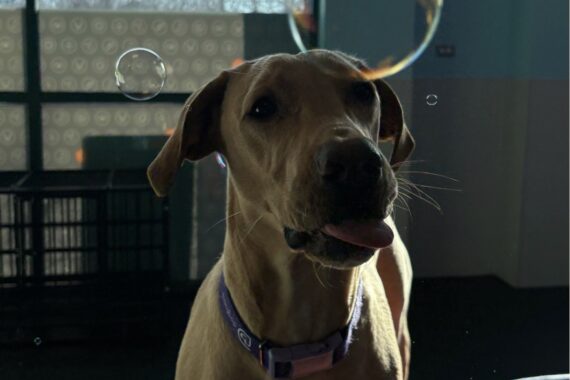
Why Dogtopia of Owings Mills Doesn’t Allow Toys During Regular Group Play
Understanding Resource Guarding, Safe Group Play, and How We Keep Dogs Engaged
When choosing a dog daycare, pet parents naturally want their dogs to have fun, stay active, make friends, and enjoy plenty of mental and physical stimulation.
You might assume that the more balls, squeaky toys, and playthings a daycare provides, the more fun the dogs will have.
But at Dogtopia of Owings Mills, we take a thoughtful approach to when and how toys are introduced.
We don’t allow traditional dog toys during regular group daycare play, but we do incorporate them in carefully supervised, low-dog-count situations where interactions are easier to manage.
Why the distinction? Because our goal is to provide enriching experiences while reducing unnecessary opportunities for conflict.
One important reason behind this policy is a natural canine behavior called resource guarding.
What Is Resource Guarding?
Resource guarding occurs when a dog attempts to protect something they consider valuable.
That resource might be a favorite ball, squeaky toy, bone, treat, resting spot, or even access to a person.
Dogs may show resource guarding through subtle behaviors such as stiffening, hovering over an object, or moving away when another dog approaches.
In other situations, guarding may escalate to growling, snapping, or biting.
According to veterinary behavior guidance from VCA Animal Hospitals, dogs can display possessive aggression when another animal or person approaches an object they value.
A dog doesn’t have to be aggressive or have a history of behavioral problems to display resource guarding.
A dog who happily shares toys with a familiar canine companion at home may behave differently in a group daycare environment with multiple dogs.
Why Toys Can Create Conflict in Group Daycare
Imagine a playroom with several dogs happily interacting.
A ball rolls across the floor. One dog grabs it. Another wants it. A third joins the chase.
Suddenly, the focus shifts from social interaction to possession of an object.
Some dogs may view this as a harmless game, while others may become protective, frustrated, or overstimulated.
Potential concerns include:
- Resource guarding: A dog may protect a toy from other dogs.
- Competition: Multiple dogs may become interested in the same object.
- Overstimulation: Repeated chasing or competition can increase excitement.
- Possessive behavior: A dog may become reluctant to surrender an object.
- Miscommunication: One dog’s attempt to play may be interpreted by another as an attempt to take a valued resource.
Toys can be wonderful for dogs in many settings, including at home, during training, and in appropriately supervised individual play.
But regular group daycare introduces different social dynamics.
Our goal is to reduce avoidable risks before they have an opportunity to develop.
But What If There Are Enough Balls for Every Dog?
This is a common argument for allowing toys in group daycare.
Some facilities believe that providing enough balls or toys for every dog eliminates competition and therefore prevents resource guarding.
At first glance, that sounds reasonable. If there are ten dogs and ten balls, shouldn’t everyone be happy?
Unfortunately, resource guarding doesn’t necessarily work that way.
Dogs don’t always value objects equally, and they don’t necessarily want whichever toy happens to be available.
One dog may become particularly interested in the ball another dog is carrying—even when several identical balls are sitting nearby.
A dog may also attempt to collect or control multiple toys.
And the presence of additional toys doesn’t automatically change how a dog feels when another dog approaches something it values.
Consider these examples:
- A dog may guard one particular ball even when other identical balls are available.
- Two dogs may become focused on the same toy despite having plenty of alternatives.
- A dog may become possessive of several toys at once.
- Chasing and retrieving can increase excitement, creating additional opportunities for conflict.
- A dog who initially shows no guarding behavior may respond differently when another dog attempts to take its toy.
The American Kennel Club’s discussion of safe play between dogs also highlights the importance of managing toy-related competition and resource guarding.
Having enough toys for every dog may reduce some competition, but it doesn’t guarantee that resource guarding or toy-related conflicts will be eliminated.
That’s the distinction behind our policy.
Rather than trying to manage competition over toys during busy group play, we choose to remove that particular source of competition.
It’s a proactive decision designed to reduce one avoidable category of risk.
Does That Mean We Never Allow Toys? Not at All!
We absolutely recognize the benefits of toys for mental stimulation, exercise, training, and enrichment.
VCA Animal Hospitals’ guidance on enrichment and activity toys discusses the benefits of appropriate enrichment while emphasizing the importance of managing interactions when pets may guard valued items.
At Dogtopia of Owings Mills, it’s not about eliminating toys. It’s about choosing the right environment and circumstances for using them.
While traditional toys aren’t permitted during our regular group dog daycare sessions, we may incorporate them in carefully supervised situations with very low dog counts.
One-on-One Time With Dogs
During individual attention and play sessions, our team may use toys to engage a dog in an activity suited to their personality and preferences.
With one dog participating, there isn’t another dog competing for possession of the toy.
Training Sessions
Toys can be valuable training tools, particularly when used as positive reinforcement or to encourage engagement and focus.
In appropriate training settings, our team can introduce toys in a structured way while maintaining control over the activity.
Quiet Boarding Evenings
During certain boarding evenings, when daycare has ended and only a very small number of dogs remain in the playroom before bedtime, our team may introduce toys as part of supervised enrichment.
Because these groups are much smaller, our team can more closely monitor individual interactions and determine whether toys are appropriate for the dogs present.
Toys are not automatically offered simply because the dog count is low. Our team considers each dog’s behavior, compatibility, and comfort level before introducing them.
The key difference is the environment.
A carefully supervised one-on-one session or quiet evening with a handful of compatible dogs is very different from an active daycare playroom with a larger group.
Our policies are designed to recognize that distinction.
How Do We Keep Dogs Stimulated Without Toys During Group Play?
Plenty of ways!
At Dogtopia of Owings Mills, we believe enrichment is about much more than throwing a ball across a room.
Our highly trained Canine Coaches incorporate engaging activities and supervised interactions that help keep dogs active, curious, and entertained.
Bubble Play
Who needs a tennis ball when there are bubbles floating through the air?
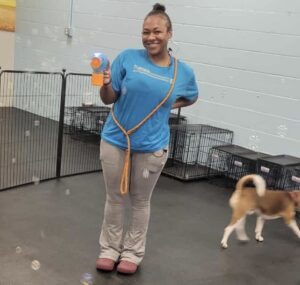
Watching bubbles drift, investigating them, and participating in playful movement can be exciting for dogs who enjoy the activity.
We use appropriate dog-safe bubbles and supervise participation based on each dog’s comfort and behavior.
Our bubble activities give dogs an opportunity to explore, move, and engage with their environment in a fun, supervised way.
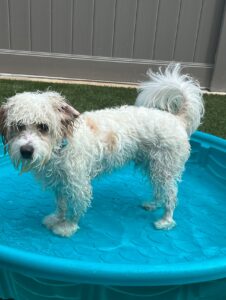
Water Play
For pups who love water, supervised water activities can provide a refreshing and engaging change of pace.
Whether they’re splashing, exploring, or simply enjoying a different sensory experience, water play can add variety to the daycare day.
Activities are offered when appropriate for the weather, facility conditions, and individual dogs.
Supervised Social Play
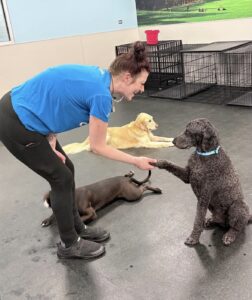
One of the greatest benefits of dog daycare is the opportunity to interact with compatible canine friends.
Dogs can enjoy movement, social exploration, appropriate chasing, and other natural social behaviors under the supervision of our Canine Coaches.
Our team monitors body language, energy levels, and play styles to help maintain positive interactions.
Enrichment Activities and Themed Play Days
We also incorporate a variety of supervised enrichment opportunities, seasonal activities, and special themed daycare experiences.
These activities provide novelty and variety without requiring traditional balls or possession-based toys during regular group play.
The result? Dogs can enjoy an active, stimulating daycare experience without relying on a room full of toys.
Enrichment Doesn’t Have to Mean Possession
There’s an important difference between providing enrichment and introducing objects that dogs may compete to possess.
Activities such as bubbles, appropriate water play, sensory exploration, and supervised social interaction can offer variety and engagement without creating the same type of prolonged possession opportunity as a favorite ball or chew toy.
Of course, any activity involving multiple dogs still requires supervision and thoughtful management.
Even bubbles or water activities may excite some dogs more than others.
That’s why our Canine Coaches monitor each activity and adjust participation based on the dogs involved.
No single activity or policy can eliminate every risk, but thoughtful choices can help reduce unnecessary ones.
Why We Believe Prevention Is Better Than Reaction
At Dogtopia of Owings Mills, our philosophy is straightforward:
We would rather reduce a preventable source of conflict than wait for a problem to occur and then respond to it.
Our approach to toy use is one part of a broader commitment to thoughtful daycare management that includes:
- Highly trained Canine Coaches.
- Supervised group play.
- Playrooms organized by dog size and compatible play styles.
- Careful monitoring of canine body language.
- Structured daily routines.
- Appropriate rest periods.
- Engaging activities such as bubbles and water play.
- Controlled toy use during appropriate individual, training, and low-dog-count sessions.
- Thoughtful policies designed to reduce avoidable conflicts.
We also maintain separate playrooms for small and large dogs, with an additional Wee Pen for our tiniest furry friends.
Read More: Why We Keep Small and Large Dogs in Separate Playrooms
Questions to Ask When Choosing a Dog Daycare
If you’re comparing dog daycare facilities in Owings Mills, Reisterstown, Pikesville, or surrounding Baltimore County communities, we encourage you to ask:
- Are balls or other toys allowed during regular group play?
- How does the facility manage resource guarding?
- If multiple dogs want the same toy, how does the team respond?
- How are dogs kept mentally and physically stimulated?
- What enrichment activities are offered?
- How are dogs grouped by size and play style?
- What training do employees receive in recognizing canine body language?
A good daycare should be able to explain not only what activities dogs enjoy, but also the reasoning behind its safety policies.
Safe Play Can Still Be Exciting Play!
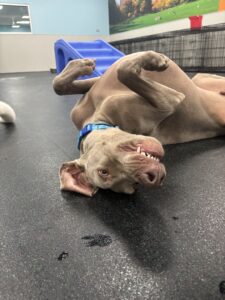
At Dogtopia of Owings Mills, we want every pup to enjoy exercise, socialization, enrichment, and plenty of fun.
Our dogs don’t need a room full of tennis balls to have an exciting day.
With furry friendships, supervised play, bubbles, water activities, appropriate individual enrichment, and a caring team of highly trained Canine Coaches, there are plenty of ways to keep tails wagging.
We believe the best daycare experience combines fun, enrichment, and thoughtful safety practices.
Experience the Dogtopia Difference
Looking for dog daycare in Owings Mills, Reisterstown, Pikesville, Garrison, Stevenson, or surrounding Baltimore County?
We’d love to show you how our supervised playrooms and engaging daycare activities work.
Schedule your dog’s Meet & Greet at Dogtopia of Owings Mills today!