Indoor Potty Training in a St. Louis Winter: A Realistic Plan for West County Puppies
January 26, 2026
If you brought home a new puppy recently, indoor potty training St. Louis winter is a challenge you may not have considered. Cold air, ice, salt, early darkness, and short attention spans turn “just take them outside” into repeated accidents and frustration.
The fix is not more willpower. It is a simple system: tighter timing, clearer cues, and an indoor-friendly backup plan that prevents failure while your puppy learns.
This guide is built for West County families who want a clean house, a confident puppy, and a routine that still works when it is under 20°F outside.
Why winter potty training fails (and why it is not your fault)
Winter creates three predictable problems:
-
Puppies do not want to linger outside. They rush, get distracted, or refuse to finish.
-
Owners stretch potty intervals. Fewer trips equals more indoor accidents.
-
Accidents become habits. A few “successful” indoor pees teach the wrong routine fast.
Your goal is not perfection. Your goal is preventing repeated indoor wins.
The non-negotiables (do these before you change anything else)
1) Tight supervision or a safe confinement plan
Potty training is mostly management. If your puppy is loose and out of sight, accidents will happen.
Use one of these options:
-
Leash tether: puppy stays attached to you indoors.
-
Playpen: small area you can see at all times.
-
Crate: only when sized correctly and introduced calmly.
If you cannot watch them, they should be in a controlled space.
2) Clean accidents like a professional
If your house smells like “old pee” to your puppy, you will fight this forever.
-
Use an enzymatic cleaner (not standard spray, not vinegar alone).
-
Blot first, then treat per the product instructions.
-
If accidents repeat in the same spot, block access temporarily.
3) Pick one potty spot and one cue
Dogs learn patterns. Winter is when consistency matters most.
-
Same door.
-
Same outside area.
-
Same cue phrase (“Go potty”).
-
Same reward immediately when they finish.
Schedule for indoor potty training St. Louis winter
Use this as a starting point. Adjust based on your puppy’s age and your reality.
Baseline timing rules
Take them out:
-
Immediately after waking up
-
After every meal
-
After every drink-heavy play session
-
After playtime
-
After training sessions
-
Right before bedtime
-
Every 45 to 90 minutes when they are young and actively playing
If your puppy is under 16 weeks, assume they need more trips than you think.
A simple day example (you can copy this)
-
6:30 am: wake, outside
-
7:00 am: breakfast, outside right after
-
8:00 am: outside
-
9:15 am: outside
-
10:30 am: outside
-
Noon: lunch (if feeding 3x), outside right after
-
Afternoon: outside every 60 to 90 minutes depending on activity
-
7:00 pm: dinner, outside right after
-
Evening: outside every 60 to 90 minutes
-
Bedtime: outside
-
Overnight: if very young, one scheduled trip or a gradual plan to remove it
The schedule is not forever. It is temporary structure so learning can stick.
How to handle the cold: get the “outside trip” down to 2 minutes
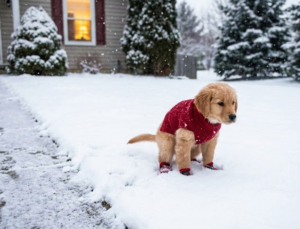
Make the trip predictable
-
Leash on.
-
Walk directly to the potty spot.
-
Minimal talking until they go.
Reward in a way that works in winter
Treats freeze. Hands go numb. Keep rewards ready:
-
Treat jar by the door
-
Treats in a pocket
-
High value treats only for outdoor potty wins
Reduce discomfort
If your puppy hesitates outside, it is often physical.
-
Consider a puppy coat for short-haired breeds.
-
Wipe paws after salted sidewalks.
-
Choose a shoveled patch of grass if possible.
The indoor backup plan (when it is dangerously cold or ice is bad)
This is where most owners get it wrong: they either refuse any indoor option and create accidents, or they let the puppy pee anywhere.
The goal is controlled, consistent indoor options that do not become the default.
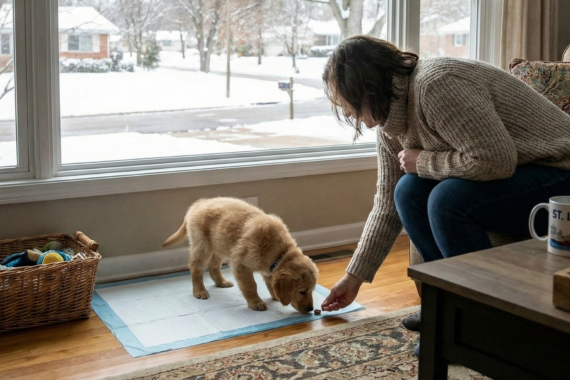
Option A: Pee pads (only if you do it deliberately)
Pee pads can work, but they confuse some dogs if placed randomly.
Rules:
-
Put the pad in one location only.
-
Keep it away from carpets and rugs.
-
Reward pad use the same way you reward outdoor use.
-
Gradually move the pad closer to the door over time if transitioning outdoors.
Option B: Porch, garage threshold, or covered spot
This is often the best winter compromise in West County.
-
It still feels like “outside.”
-
It is less painful for the puppy.
-
It is easy to keep consistent.
Option C: Indoor grass patch (best for some homes)
If you have a hard winter setup and a tiny puppy, an indoor grass patch can reduce accidents. The same rules apply: one location, one cue, same reward.
The #1 mistake: free-roaming after a “failed” trip outside
If your puppy does not go outside, assume they still need to go.
Do this instead:
-
Bring them in.
-
Put them in a controlled space (crate or pen) for 5 to 10 minutes.
-
Go back out and try again.
No wandering around the house after a failed trip.
How DOG DAYCARE supports potty training (if you use it correctly)
For many puppies, structured daycare can accelerate routine building because the day becomes predictable: activity, rest, and regular breaks.
If you are considering puppy daycare in Ellisville, the key is expectations:
-
Daycare does not replace training at home.
-
Daycare can support your schedule by preventing long stretches alone.
-
Consistent attendance builds familiarity with routines, people, and environments.
If your puppy is still learning, your home routine must stay tight on non-daycare days. Be sure to schedule a Meet & Greet to get your dog started in daycare as soon as they complete vaccinations, it’s important to make socialization a regular part of their life early on so they do not develop separation anxiety when you can’t be with them. See more on our flexible daycare options and pricing that are flexible for all parents.
When accidents mean something else
If potty training suddenly regresses, consider:
-
Urinary tract infection (frequent small pees, discomfort)
-
Diarrhea or GI upset after food changes
-
Too much freedom too early
-
Punishment after accidents (creates hiding, not learning)
If you see signs of discomfort, talk to your vet.
Quick troubleshooting guide
“My puppy pees 10 minutes after coming inside.”
You stayed outside too long without success, or they got distracted. Make trips shorter and more focused. Use the “failed trip” rule.
“My puppy only has accidents when we are cooking or distracted.”
That is supervision failure. Use tethering or a pen during high-distraction times.
“My puppy pees in the same spot every time.”
Enzymatic clean, block access, and increase frequency. That spot is now a habit cue.
“My puppy refuses to go outside when it is cold.”
Use the covered spot method or an indoor backup temporarily. Prevent accidents first, then transition.
FAQ
How do encourage puppy indoor potty training in St. Louis winter
Use a tighter schedule, shorter outdoor trips to one potty spot, and high-value rewards. If weather is unsafe, use a controlled indoor backup in one consistent location.
How often should a puppy go out in winter?
Often. After waking, eating, drinking, playing, and at least every 45 to 90 minutes when young and active. Winter usually requires more trips because puppies rush outside.
Is it bad to use pee pads in winter?
Not if you use them deliberately in one location and treat them as a temporary tool. Random pad placement or letting accidents happen is what creates confusion.
Why does my puppy have accidents right after being outside?
They did not finish outside. Cold and distractions cause “half attempts.” Keep trips short and focused, then supervise closely after coming back in.
Can daycare help with potty training?
Daycare can support routine and reduce long stretches at home, but it does not replace your at-home schedule. Consistency across all days matters most.
For additional help:
-
House-training basics / management: American Kennel Club (AKC)