How to Create a Calm Corner in Your Home for Your Dog
Like people, dogs can benefit from having a calming space where they can unwind. Between household noise, visitors, and everyday activity, a quiet place to relax can help reduce sensory overload and support emotional self-regulation. That’s where a designated calm corner can come in handy, giving your pup a comfortable retreat where they can take a break whenever they need some quiet.
Along with exercise, socialization, and enrichment, a comfortable place to rest is an important part of supporting your dog’s well-being. In this article, we cover the benefits of creating a calm corner for your pup and tips for setting one up in your home.
BENEFITS OF CREATING A CALM CORNER FOR YOUR DOG
Everyday household activities can sometimes be overwhelming for dogs, especially in a busy home, making it difficult for them to rest and relax. Even pups who love playing and spending time with people need opportunities to slow down, so a dedicated calm corner gives them a comfortable place to step away from the activity and unwind.
A designated space can also support better rest by giving your dog a place where they’re unlikely to be interrupted. Over time, it can become a familiar predictable space where your dog feels safe, secure, and completely at ease. Think of it as their own special place where they can simply be themselves, without expectations or demands.
HOW TO CHOOSE THE RIGHT LOCATION IN YOUR HOME FOR YOUR DOG’S CALM CORNER
When choosing a spot for your dog’s calm corner, pick a low-traffic area out of the main household flow, like a spot under the stairs or in a quiet corner of the living room, but don’t isolate your dog from you or your family entirely. The goal should be to give them a peaceful place to relax while still feeling close to their favorite people.
Your pup’s calm corner should be:
- Away from higher traffic or louder areas like the front door, hallways, or even windows where outside activity may cause distractions and barking
- Designated as their resting area going forward, rather than a spot that frequently needs to be cleared or used for other activities
- Easily accessible so they can retreat whenever they need a break
- In an area where you are frequently working or resting. Dogs will rest easier if they can see you
WHAT TO INCLUDE IN YOUR DOG’S CALM CORNER
Every pup is different, and their calm corner should reflect their personality and preferences. Some dogs prefer a tucked-away area, while others feel most comfortable resting near others. The goal is to create an inviting space where they feel comfortable and relaxed.
Here are a few tips to consider when setting up your pup’s calm corner:
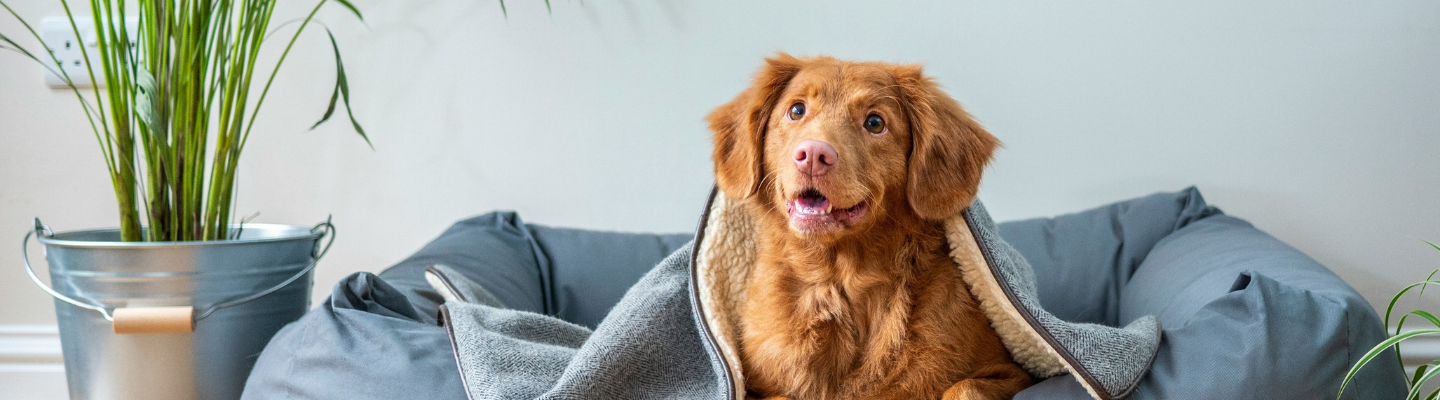
- Choose a comfortable bed or blanket: Give your pup a soft place where they can stretch out and relax. A favorite blanket or bed can help make the space feel familiar and comfortable.
- Consider a cozy, enclosed option: Some dogs feel more comfortable in a partially enclosed space, like a covered bed or crate. If your pup enjoys this type of setup, make sure they can enter and leave freely whenever they choose.
- Introduce calming enrichment toys: Add enrichment toys like a snuffle mat, food puzzle, or a stuffable dog toy to encourage self-soothing as they take a break. Choose options that suit your pup’s size, age, and chewing habits, and supervise as needed.
- Keep clean, fresh water nearby: Place a bowl of fresh water nearby so your dog can stay hydrated without having to venture far from their resting spot.
SUPPORT YOUR DOG’S WELL-BEING WITH DOGTOPIA
Creating a calm corner at home is one way to support your dog’s overall well-being. Just as pups need a comfortable place to rest, they also benefit from opportunities to exercise, socialize, and engage their minds. At Dogtopia, pups enjoy supervised off-leash play with other like-minded dogs, engaging activities organized by our expert Canine Coaches, and scheduled nap time to recharge throughout the day.
Looking for more ways to keep your pup active and social? Find a Dogtopia near you.
This blog was reviewed/edited by Dogtopia’s Senior Director of Health & Safety Lorraine Rhoads, an experienced animal biologist and environmental scientist.

-
How will daycare benefit my dog?

Dogtopia provides a safe, fun environment for dogs to play, learn, exercise, and socialize with like-minded friends.
- Clean, climate-controlled playrooms
- Activities designed to keep dogs active and moving safely
- Mentally stimulating games to strengthen problem-solving skills
- Caring, professionally trained coaches who interact with each dog